
From Hydrocarbons to Critical Minerals: Managing Africa’s Extractive Future in the Energy Transition
Africa’s energy and extractive sector remain central to its economic development, serving as a key source of public revenue and foreign exchange. Despite this resource wealth, many countries continue to face persistent challenges, including weak governance, limited value addition, revenue leakages, and inequitable distribution of benefits.
These longstanding issues are now unfolding within a rapidly evolving global context shaped by the energy transition, shifting commodity demand and changing investment dynamics. As a result, the critical question is not simply about resource endowment, but how extractive resources are governed to deliver sustainable, inclusive, and resilient outcomes. Without deliberate and forward-looking reforms, the sector risks perpetuating inefficiencies and missed development opportunities, even within emerging transition-driven markets.
2026 AFREIKH Summer School
The Anglophone Africa Extractive Industries Knowledge Hub (AFREIKH) aims to bridge knowledge gaps in the energy and extractive sectors in Africa through training and capacity building to improve effective extractive sector governance. This year, ACEP, with support from the Natural Resource Governance Institute (NRGI), will host the one-week intensive summer school on extractive industries governance in Accra, Ghana.
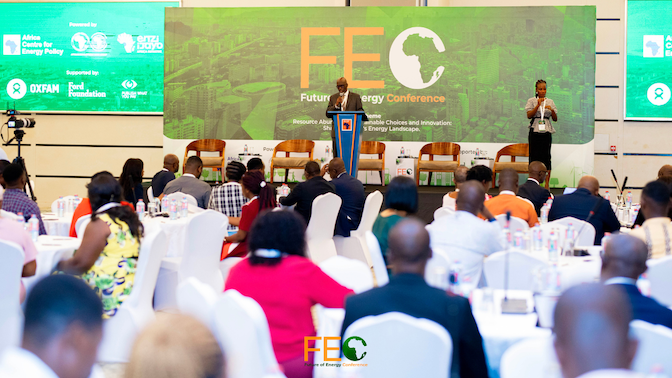
This intensive summer school will convene extractive sector stakeholders across Anglophone Africa to delve into the critical issues, challenges, and evolving landscape of Africa’s extractive industries, while navigating the ongoing energy transition. Participants will also gain practical insights by attending the Future of Energy Conference (FEC), which offers a platform to explore innovative solutions and strategies for a sustainable energy future for Africa.
📅 18th – 28th August, 2026
📍 Accra, Ghana




The program will engage participants in critical discussions on the evolving dynamics of Africa’s energy and extractive sectors within the context of the global energy transition. The program will explore the following interconnected themes:
- Energy Transition Under Fiscal and Governance Constraints: This theme examines how African countries navigate energy transitions under fiscal pressure, infrastructure deficits, and political economy constraints. It focuses on transition pathways, highlighting trade-offs between cost, access, reliability, and reform implementation.
- From Resource Extraction to Resilience: Maximising Economic Benefits in Energy Transitions:This theme examines how African countries can leverage the energy transition to drive economic transformation. It focuses on critical minerals, green industrial policy, value addition, and integration into regional and global value chains, while addressing structural constraints such as energy reliability and financing.
- Environmental and Social Governance (ESG) in Extractives: This theme examines the regulatory and institutional frameworks that govern environmental and social risks in extractive industries. It focuses on compliance systems, enforcement capacity, and accountability, and analyses the gap between formal ESG commitments and actual practice.
- Community Outcomes, Benefit Sharing and Just Transition: This theme examines how extractive and energy transition processes affect communities, focusing on distribution of benefits, livelihoods, and social outcomes. It analyses revenue-sharing mechanisms, participation, and equity, and situates these within a just transition framework.
- Financing Africa’s Energy Future: Geopolitics and Strategies for Resource Mobilisation: This theme examines how Africa can finance its energy future across energy systems and industrial pathways. It analyses financing gaps, cost of capital, and structural barriers, and explores the role of public finance, private capital, and geopolitical dynamics in shaping investment flows.
The summer school is designed for civil society organizations (CSOs), media, and government actors working to promote good governance in extractive industries. Graduates join a vibrant alumni network that offers continued mentorship, professional development, and a platform for learning, collaboration, and collective action across Africa.
Applicants must:
- Be a citizen of an Anglophone African country
- Hold a position in an institution engaged in extractive, energy, or related policy and governance fields (e.g. parliament, academia, civil society, media, or legal and regulatory institutions), and have a minimum of three years’ relevant professional experience in areas such as natural resource governance, energy systems, environmental management, law, finance, or development policy.
- Demonstrate strong interest and understanding of policy and governance issues related to natural resources, including energy transition.
- Be able to fully participate in the entire program.
- Have a good command of written and spoken English.
Required Documents
- Completed application form
- Curriculum Vitae
The programme fee is USD 2,500 which covers tuition, accommodation, meals, local transportation, and programme-related logistics, and exclusive of international flights and visa-related expenses.
Scholarships
A limited number of full and partial scholarships are available and will be awarded competitively following the application review process. Scholarships are exclusive of per diems or daily subsistence allowances for all participants.
Due to the limited availability of scholarships, applicants are strongly encouraged to explore alternative funding sources, including support from their institutions, employers, or external sponsors.
Applicants will be required to indicate their funding preference:
- Fully funded (scholarship required)
- Partially funded (co-funding covering tuition, meals, and local transportation)
- Self-funded/Organisation-funded
Women are especially encouraged to apply.
Application deadline is Friday, 8th May, 2026
For any application challenges or queries related to participation in the summer school, please direct your inquiries to betty.owusu@acep.africa or info@acep.africa