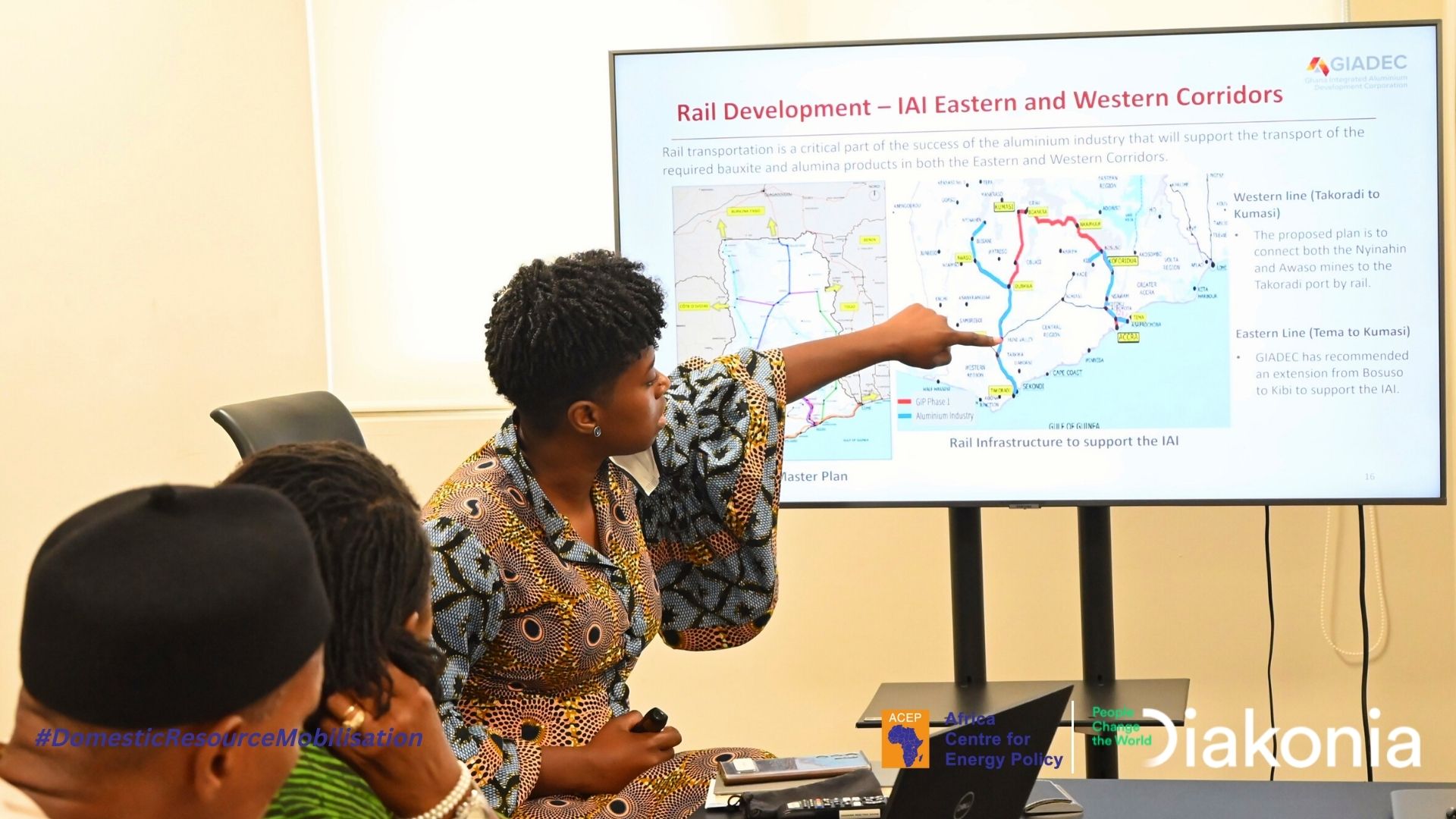
The 2027 Budget makes some of the boldest policy shifts in years on how Ghana manages its natural resource wealth. It would bring oil and mineral revenues under one law and direct them to major infrastructure like the Western Corridor Railway. It would also merge MIIF and GIIF into a new Ghana Sovereign Wealth Fund, put money into new thermal, solar and nuclear power, and ban raw exports of gold, manganese and bauxite.
The direction is right. Whether it works depends on how well the plans are designed, how carefully public money is spent, and whether the technical and financial gaps get fixed. Our new brief looks at all three across the petroleum, power and mining sectors.
Key findings:
Oil revenues are falling. Petroleum receipts are projected to drop by 35% between 2027 and 2030 as mature fields decline. Meanwhile, oil money is again being set aside for a railway whose feasibility studies aren’t finished.
The Sovereign Wealth Fund needs an audit first. Merging MIIF and GIIF without first auditing their investments could carry old weaknesses into a bigger fund.
Consumers are paying twice. Electricity users pay for utility losses through their tariffs and also through the Energy Sector Levy. Levy collections are projected to grow 51% by 2030, and the Budget doesn’t say what the money will fund once the shortfall is gone.
The new power plant may not have enough gas. The state’s planned 1,450 MW thermal plant would run on the same gas volume the 2026 Budget said was enough for only 1,200 MW.
The nuclear plan has a big hole. US$200 million is committed to nuclear readiness, but there is no financing plan for a plant that could cost US$15 to 30 billion.
Small-scale gold brings in almost nothing. Despite 88 tonnes of small-scale gold exports worth US$12 billion, the Budget reports no royalty or tax receipts from it.
Not every processing target is realistic. Local gold refining is achievable. Processing all of Ghana’s manganese would need about 1 GW of continuous power. Ghana doesn’t yet have a single operating alumina refinery.
Land reclamation is badly underfunded. The money set aside covers only 15 to 38% of the real cost of restoring the targeted land.
The brief also sets out specific recommendations for each sector to turn the Budget’s goals into results people can measure.