Agriculture remains central to Ghana’s economy, livelihoods, and food systems, contributing approximately one-fifth of the country’s gross domestic product (GDP) and employing a significant share of the labour force, particularly in rural communities. However, the sector is increasingly vulnerable to the impacts of climate change, including rising temperatures, erratic rainfall patterns, prolonged dry spells, and more frequent flooding. These climate-related risks threaten agricultural productivity, rural livelihoods, and national food security.
At the same time, agriculture is a significant source of greenhouse gas (GHG) emissions. Although carbon dioxide accounts for the largest share of Ghana’s overall emissions profile, methane is becoming an increasingly important concern due to its high short-term global warming potential and its close association with agricultural production systems.
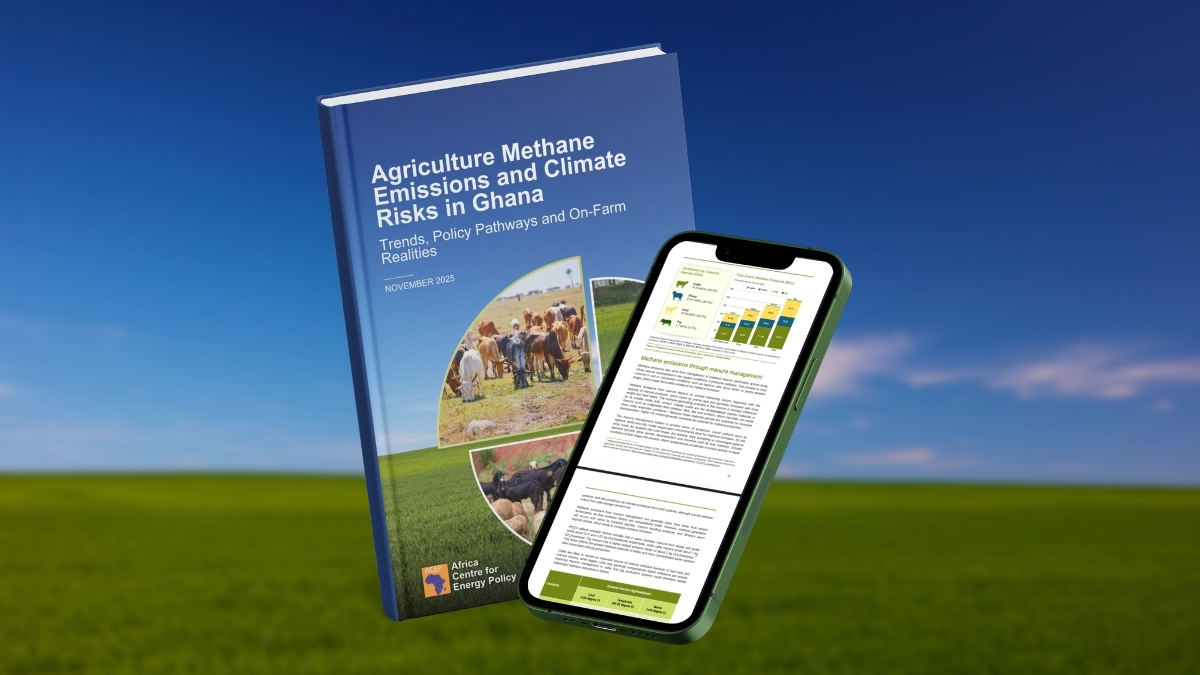
This paper examines methane emissions from Ghana’s agricultural sector, focusing on the magnitude and drivers of emissions, the policy and institutional landscape, and the practical challenges associated with methane mitigation. The analysis covers the three principal agricultural sources of methane emissions: enteric fermentation from livestock, manure management, and flooded rice cultivation.
Using recent livestock population trends and the Intergovernmental Panel on Climate Change (IPCC) emission factors, the study estimates that methane emissions from enteric fermentation and manure management could increase by approximately 90% by 2040 relative to 2024 levels under a business-as-usual (BAU) scenario. Similarly, methane emissions from rice cultivation are projected to rise substantially as Ghana expands rice production in pursuit of its food security and import substitution objectives.