FOR IMMEDIATE RELEASE
Future of Energy Conference 2026 Innovation Challenge Announces Shortlisted Finalists
Accra, Ghana | 14 August 2026 – The Africa Centre for Energy Policy (ACEP), in partnership with Africa Change Lab (ACL), is pleased to announce the shortlisted finalists for the Future of Energy Conference (FEC) 2026 Innovation Challenge, following a rigorous review of applications received from innovators across Africa.
The Innovation Challenge, seeks to identify and support innovative African-led solutions addressing the continent’s energy transition, sustainable industrialisation, climate resilience, and critical mineral value addition.
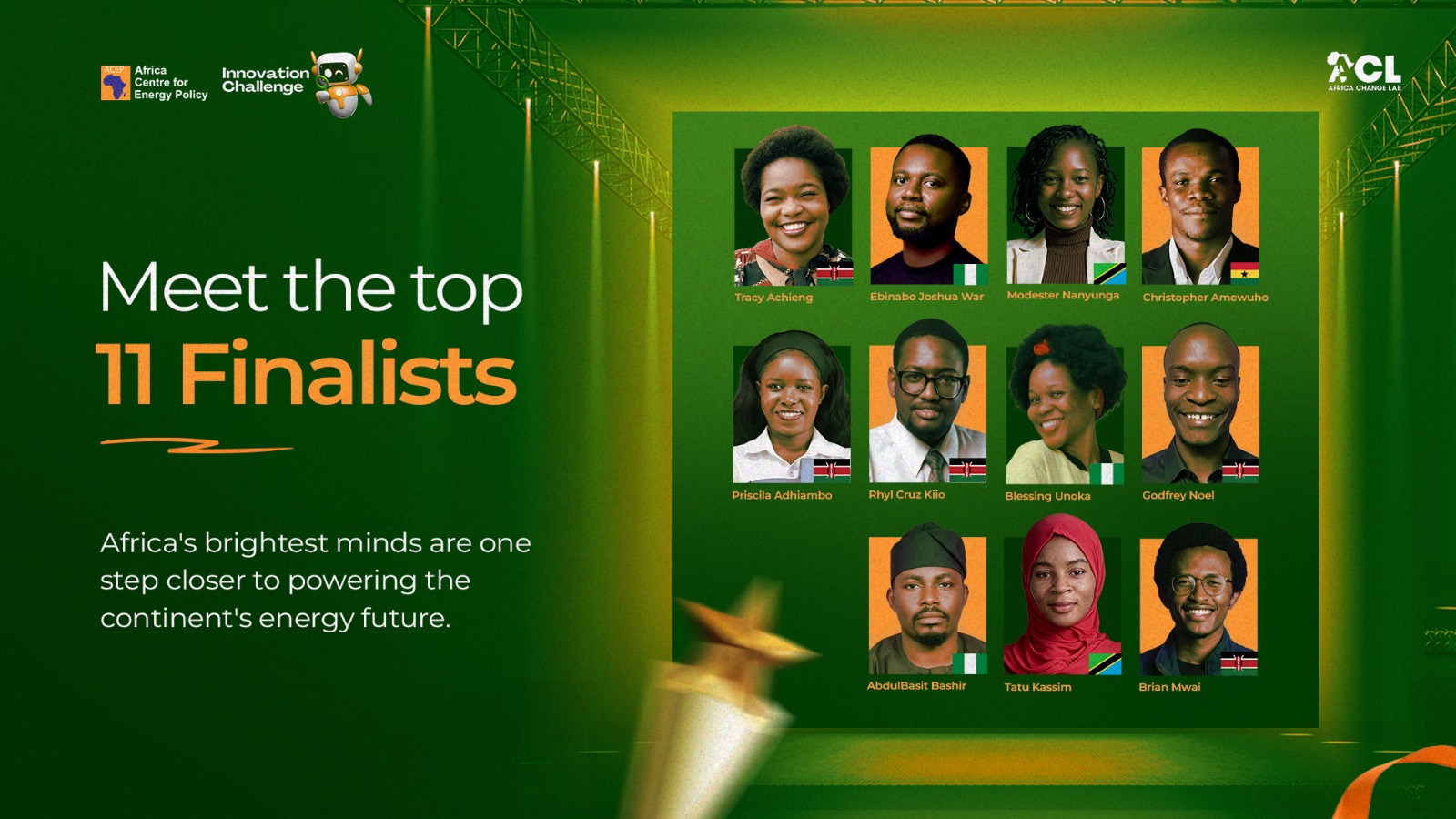
This year’s Challenge attracted applications from innovators, researchers, entrepreneurs, and engineers across Africa. Following a competitive evaluation process, eleven outstanding innovators have been selected to advance to the next stage of the Challenge across two tracks: the Pan-African Low Carbon Track and the AfroHackathon Track.
Shortlisted Finalists
Pan-African Low Carbon Track
- Blessing Unoka (Nigeria) – Solar Powered Fortified Food Processing with Integrated Biodigester Waste to Energy System – Sambal Enterprise
- Godfrey Noel (Kenya) – AgriKonnekt: Offline Climate Finance Infrastructure for Smallholder Carbon Markets in East Africa
- Rhyl Kiio (Kenya) – Containerized Pay-As-You-Go Adsorbed Biogas and Digital Measurement, Reporting and Verification for Off-Grid Communities
- Tatu Kassim (Tanzania) – Transforming Banana Waste into Biodegradable Packaging for Africa’s Low-Carbon Future
- Tracy Achieng (Kenya) – KilimoChills Solution
AfroHackathon Track
- AbdulBasit Bashir (Nigeria) – AfreVolt : Circular battery solution.
- Brian Mwai (Kenya) – REVLOG: Safe, Traceable Recovery and Second Life for Africa’s Retired Lithium Batteries.
- Christopher Amewuho (Ghana) – AfroCycle: Closed-Loop Battery Recycling and Critical Mineral Recovery
- Joshua Ebinabo War (Nigeria) – Lenol : Mobility through solar-powered battery swapping hubs embedded inside dense urban markets.
- Modester Nanyunga (Tanzania) – SolarPay Swap Hubs: Community-Owned Solar Battery Swapping System for Sustainable Fishing Livelihoods in Coastal Tanzania
- Priscila Adhiambo (Kenya) – Pamoja Cell: Second-Life Battery Modules for Off-Grid Cold Storage
The shortlisted finalists represent the diversity, ingenuity, and entrepreneurial spirit driving Africa’s clean energy future. Their innovations span renewable energy, sustainable agriculture, battery recycling, energy storage, circular economy solutions, climate technology, and productive use of energy, demonstrating practical approaches to addressing some of the continent’s most pressing development challenges.
The shortlisted innovators will now proceed to the next phase of the Innovation Challenge, where they will receive further engagement and prepare to present their innovations before policymakers, investors, researchers, development partners, and industry leaders during the Final Pitch Event at the Future of Energy Conference 2026, taking place in Accra, Ghana, from 25–26 August 2026.
The Innovation Challenge is supported by Africa Change Lab (ACL), Africa Centre for Energy Policy (ACEP) and the United Nations Development Programme (UNDP) through the Timbuktoo Initiative, reflecting a shared commitment to strengthening African innovation ecosystems and advancing sustainable energy and industrial development.
For media enquiries and further information:
Email: fec2026@acep.africa
About the Future of Energy Conference
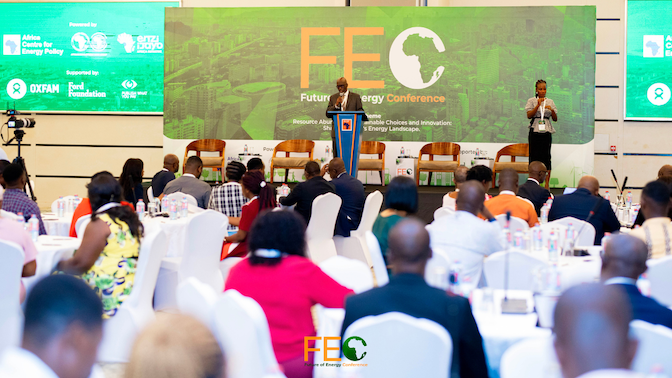
The Future of Energy Conference (FEC) is Africa’s premier platform for dialogue, innovation, and collaboration on the continent’s energy future. Bringing together policymakers, industry leaders, researchers, investors, and innovators, the Conference explores practical solutions that advance energy security, industrial development, and a just energy transition for Africa.
About the Innovation Challenge
The Future of Energy Conference Innovation Challenge is a pan-African initiative designed to identify and support innovative solutions that strengthen Africa’s energy future through research, technology, entrepreneurship, and industrial development. Through mentorship, collaboration, and engagement with policymakers, investors, and industry leaders, the Challenge empowers African innovators to develop scalable solutions that contribute to sustainable industrialisation, energy security, and inclusive economic growth.
About Africa Change Lab (ACL)
Africa Change Lab (ACL) is a pan-African platform that accelerates systemic change through innovation, collaboration, and evidence-based action. ACL works with governments, research institutions, development partners, and innovators to design and scale solutions that address Africa’s most pressing development challenges, with a focus on sustainable industrialisation, energy transition, and inclusive growth.
About Africa Centre for Energy Policy (ACEP)
The Africa Centre for Energy Policy (ACEP) is a leading African think tank dedicated to advancing transformative energy, extractive, and environmental policies. Through research, advocacy, and policy engagement, ACEP works with governments, civil society, industry, and development partners to promote sustainable energy systems, responsible natural resource governance, and inclusive economic development across Africa.
About the United Nations Development Programme (UNDP) Timbuktoo Initiative
UNDP Timbuktoo is the United Nations Development Programme’s pan-African innovation initiative that supports startups, entrepreneurs, and innovation ecosystems across Africa. Through strategic partnerships, investment, and ecosystem development, Timbuktoo helps scale African innovation to address sustainable development challenges, create jobs, and accelerate inclusive economic transformation across the continent.